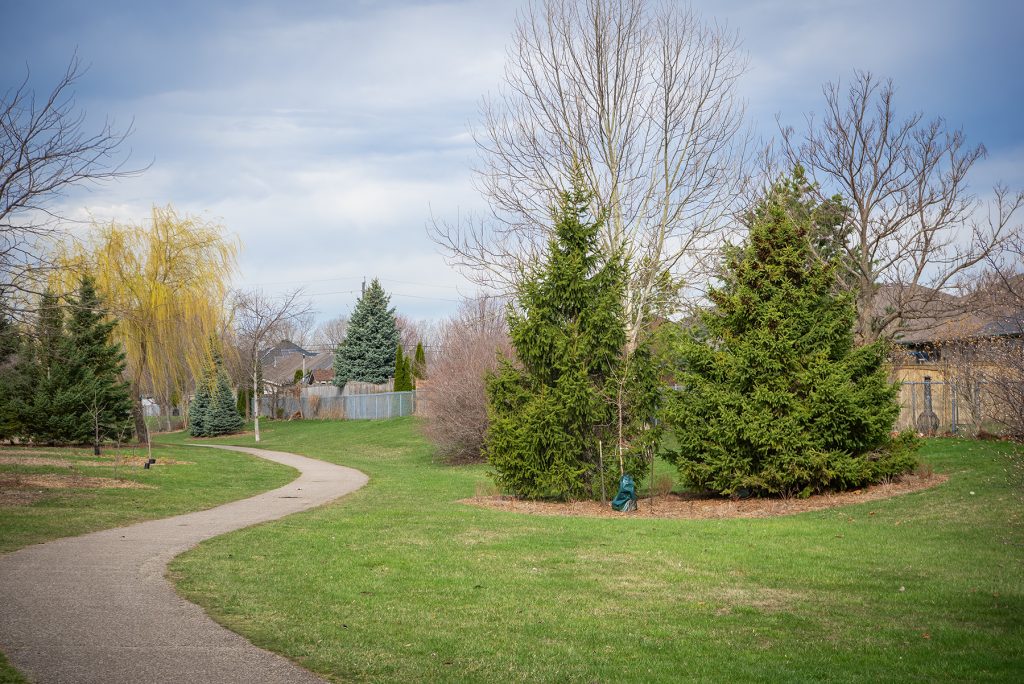
April 21, 2026 — Revitalization of a naturalized space on Berger Road has been completed, addressing resident concerns while at the same time ensuring ecological benefits continue to be delivered.
The City’s forestry and horticulture teams spent this past week completing the final phase of work to realize Council’s direction in enhancing the naturalized area between Modeland Road and the Rapids Parkway. Work began in the fall with the removal of overgrown vegetation and wrapped up this week with the planting of 760 native shrubs and 27 native trees across 22 planting pods in the corridor.
The project was supported by a $5,115 contribution from The Reforestation Project, an agent-led initiative at RE/MAX Sarnia Realty Inc that directs a portion of commissions toward local reforestation and community beautification. Total project costs, including removal of initial vegetation, planting area creation and plantings themselves were approximately $40,000.
The project balances aesthetic considerations while upholding the intent to provide wildlife and pollinator habitat alongside strengthened ecological connectivity.
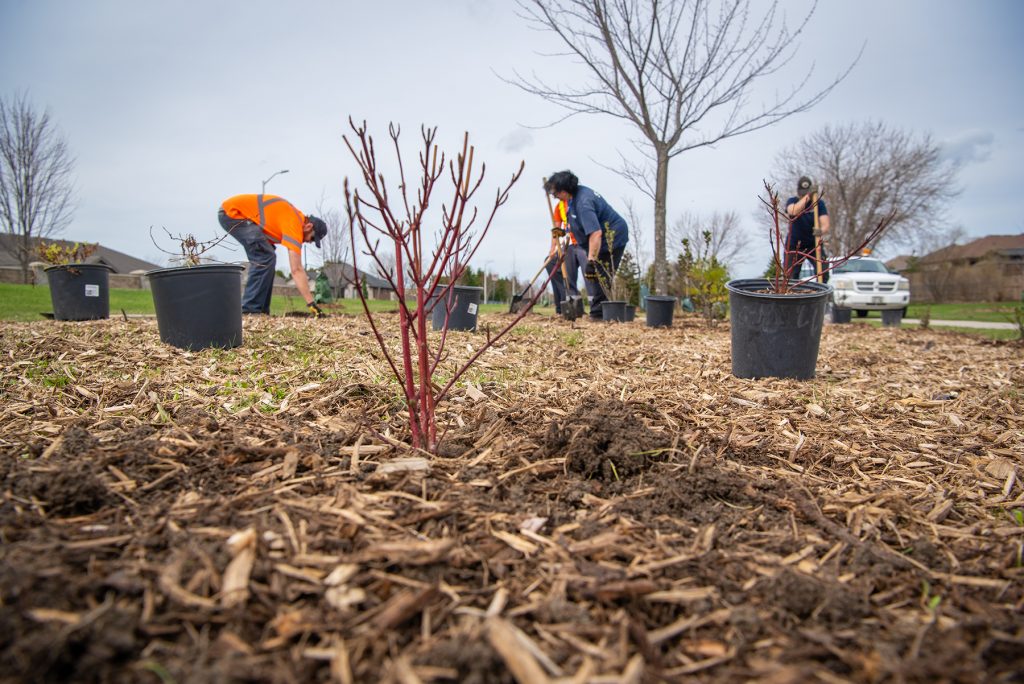
“This is very much a managed approach, ensuring that naturalized areas provide a visual enhancement to the community, but also deliver on strengthening ecological connections, in this case connectivity between the Howard Watson Nature Trail and the Wawanosh Wetlands,” said City Superintendent of Parkland Planning Services Bryana McLaughlin, adding, “we’re creating a welcoming, shaded, and ecologically healthy trail corridor that benefits both the community and the natural environment not only now, but for years to come.”
Native trees and shrubs were chosen based on their ability to build on existing vegetation, increase biodiversity, and create a resilient, low-maintenance landscape that will continue to improve as the plants mature. Shrubs chosen include serviceberry, red osier dogwood, ninebark, dwarf fragrant sumac, smooth rose, purple flowering raspberry and others. A range of native trees were planted, including, but not limited to, sugar maple, tulip tree, white oak, white pine, hackberry and red oak.